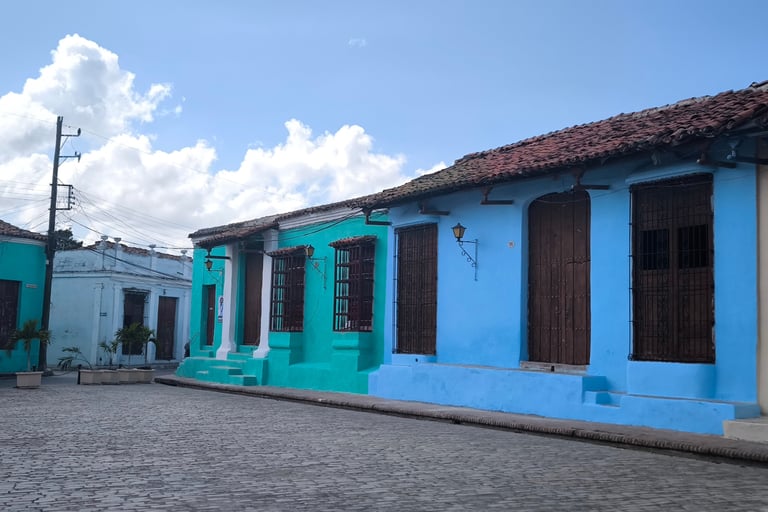
Recently I travelled across Cuba from Santiago to Havana. I have been to Cuba often but this visit was special as I was crossing the long island for the first time. The long island is sometimes referred to as the Saphire or the Queen of the Caribbean. I (un)pompously describe its shape as that of a banana. Some Cubans – first and foremost my better half – find that an understatement of its attractive outlines and say it looks like a Crocodile.
I was driving from East to West with my two boys. My wife and their mother could not make it because of passport issues so we had to find our own way through Cuba like three semi-orphaned aliens. We admired its beaches, trees, wildlife and beautiful colonial architecture – so often dilapidated but also full of hard-working families and super excited children. Cuba’s nature I will mention many times- it is lush and rich like very few places on Earth.
Returning to Cuba feels like reading a poem about tragic love of what could have been. Most people there lead a lifestyle where the needs and wants of a person often feel more relatable than the modern problems of people born into generations named after letters that sound like variables in a maths problem. The case is that often people’s lives seem simpler because of chronic shortages of things like medicines and food. That is not a choice they have made themselves not anyone would do for that matter. But, it is a helpful observation coming from a wealthy society where plentifulness so often seems to lead to to depression rather than happiness, while Cuban scarcity leads to an inherently unfair struggle for a very large part of the population. A struggle they often fight bravely.
I will not try to sugar coat the situation. As a regular traveller of the island and many other corners of the world, I am also not going to exaggerate Cuba’s has many shortcomings like almost every relevant or irrelevant commentary on the country tends to emphasize. Those often seem to end up in hyperbolic political views about potential dramatic changes to the Cuban system. Those changes are needed, that is clear as daylight. But it is also obvious that Cuba is a very special place on this blue planet of ours and worth everyone’s time to visit. So let me begin before my words, time and two boys run away from my typing fingers.
We arrived in Santiago de Cuba in the late afternoon of 16 December 2025 on a wide body Airbus 330-200 from Madrid. It was a wet lease of Cubana de Aviación (an airline I’ve always wanted to fly with as much as my wife has wanted to avoid) from the pretentiously named PlusUltra of Spain. We got to walk across the airport tarmac which is always impressive, especially when you look upon a giant airplane that has just flown over seven thousand kilometres and looks exactly as it did before departure. Not bothered at all. Into the airport building we went. It resembled more of a school canteen due to its noise and random tables. Everyone, especially the passengers (with some notable local tradespeople exceptions), were super polite and considerate. A customs guard corrected me when I called her Señora – she said Señorita (and she was correct). I had been chosen for a random check. Immediately after her questioning, I instructed my nine-year-old son to get busy using his charms with the señorita and her señorita friends, also customs guards in tailored shirts, short skirts and dark tights. His efforts paid off because they only half-heartedly searched one suitcase. I had made sure to put dirty underwear on top in all my bags precisely for the enjoyment of Cuban customs. When they saw that I had nothing more than some medicines, clothes, new footballs and basketballs to give away to local kids, they did not have it in them to reprimand me for bringing three bags of mixed nuts that probably fall into a category of food grown in a natural setting somewhere else and therefore dubious to Cuban officials.
After exiting the airport, the host of our bed and breakfast (or casa particular as they call them in Cuba) was waiting for us outside. He was holding up a sign that had my younger son’s name written in big letters (I had asked for this beforehand). I told my son this was his VIP treatment, and it turned VVIP when we saw our hosts car, a 1962 tiny Renault that looked quite similar to a VW Beattle. On the roof the bags went, tied steady with a rope and down the hill we slid like four kids on a surfboard. Best lit car ever on the inside with no less than three LED strips to help us get comfortable in the near absent space of the backseat.
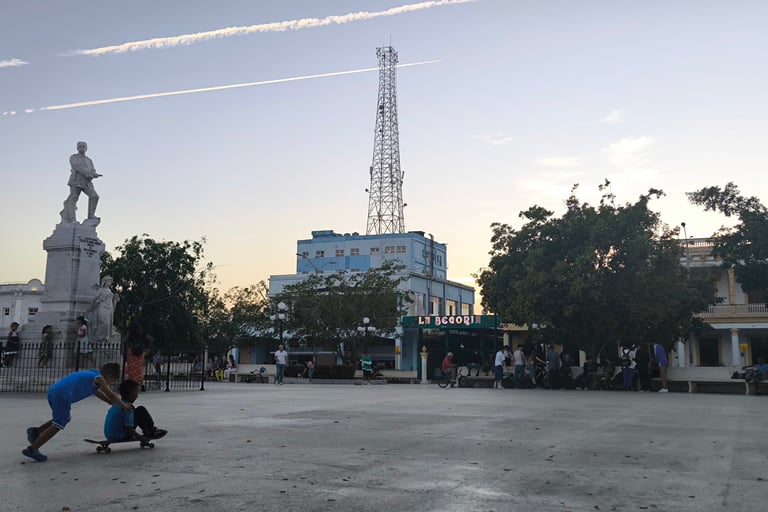
I think I heard somewhere that the idea for AirBnB came during the founder’s travels in Cuba. He witnessed the functionality of Cuba’s casa particulares system. Ours was an attached house on an unassuming street in the downtown area behind the Catedral and the House of the Trubador (Casa de la Trova). Our hosts were a couple of a similar age to me, young and ripe at almost fifty. They served us a very nice breakfast including home-made mango juice on the roof, switched on a good wifi connection whenever we asked and started up the generator when the “corriente se acabó” or the electricity blacked out (which was about twice every 24 hours for a few hours at a time). We walked all around the city, mostly the long shopping strip that leads all the way from the port up to the two or three squares, which the Cubans call parks. There, adult men play chess and dominoes in the evenings and kids play with tin cans and any odd stuff they can find as if they were early 20th century kids with an imagination trained for discoveries.
The port of Santiago was a bit sad but still fun to visit. One could almost feel that the two tankers floating there feared being confiscated by the newly anointed pirate country that claims to unite some states in the Americas. We visited the Museum of the Armed Resistance and were led around by a polite guide whose attitude – quite ironically for her workplace – felt like that of a deserter. She displayed great sensitivity towards my sons. There were old guns, Molotov cocktails and bloody photos of rebels gunned down in the street by the Batista regime, including the rebel legend Frank País García. His old high school classmate had become a police officer and could identify him to his bosses, which lead to him being brutally gunned down in the streets. My 9-year-old son almost touched the floor with his chin in awe when observing the bloody photos and decided there and then to brag about his rebel grandfather to his school friends immediately upon returning home.
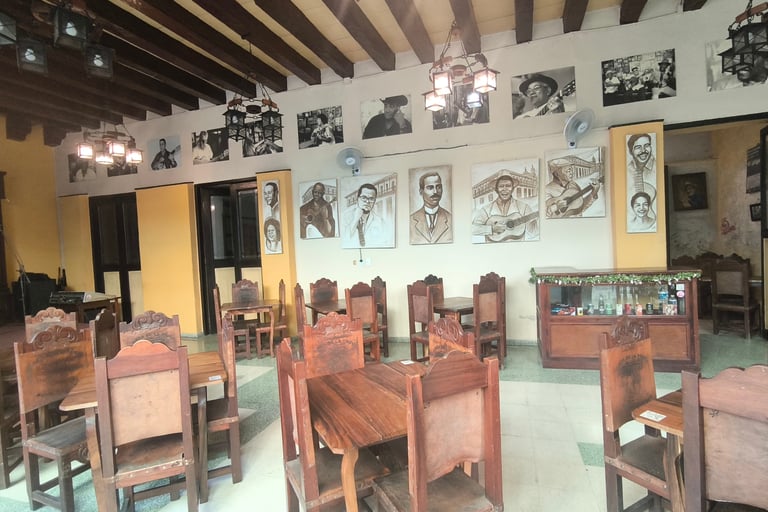
The highlight of Santiago was undoubtedly the House of the Troubadour[BGM1] . We came mid-day. An incredibly powerful band was playing led by a contra-bassist with two trumpeters and others. A little kitten woman with amazing facial piercings sang Cuban standards. When she sang a romantic tune, she stared deep into my eyes sending butterflies and jumping frogs into my stomach. As the lucky husband of her compatriot, I indicated to her to look into the eyes of my older son instead. She immediately obliged with the same effect on the young man.
After two nights in Santiago, we took a taxi in the morning due west along the mountain range of the Sierra Maestra to the town of Bayamo A rental car was waiting for us there. It was a gorgeous drive along the roots of the mountains with their almost perfect 45-degree inclines. The road slalomed along green valleys at first and then fertile farmland later, most of which seemed to be in active use. When we arrived at the car rental a very polite and tidy gentleman sitting alone in an air-conditioned room picked up the phone to ask for the car from the depot as if they never expected me to show up. In very Cuban fashion, the car and the delivery man arrived very late. He parked and then proceeded to have a leisurely conversation with some random lady passing by before he finally took the 20 or so steps to where his colleague and I were waiting. By then we were 30 minutes past the pick-up time. Both of the car rental representatives were apologetic about the delay. They told me this was Cuba to hide their faint blushes in the coolness of the air-con.
We drove into the centre of Bayamo and walked the main strip. We bought frozen cans of Cola from a very nice bar that was named after some German City (maybe St Pauli). My two boys had pizza from a young street vendor, and we marvelled at the antique cars and motorcycles. Bayamo has the feel of a low-rise town where a shootout in a spaghetti western could take place with rifle men on the roofs, women in elaborate dresses and the main character getting away on horseback.
We then jumped into the car and drove 2 hours North to the legendary city of Holguin. One of Cuba’s most important cities whose inhabitants claim that it is undoubtedly the nicest and the friendliest of all cities in the land. And they have a good case. During the drive there was again lots of fertile farmland, but beautiful forests started appearing and the trees were like the ones you see on photos from the Amazon without the water surrounding them. We had been given a tired and banged up Chinese Proton Saga, slightly bigger than a small hatchback. Being Icelandic, I was of course proud that the epic drive I had planned would be journeyed in a car model named after the Icelandic word for Epic (Saga), one of only two words I know about that have migrated and established themselves in the English language and many other – the other being Geyser.
Holguin turned out to be the right call for a visit. Best described as a beautiful and relaxing city. We drove very slowly behind a horse cart for a few minutes while entering the city through narrow lanes towards our accommodation. But rather than annoying me it created a calm mindset, which is helpful for a city that is both in reality and in spirit a few hundred years old.
Our accommodation turned out to be quite something. Through a friend in Iceland, we had been put in touch with an elderly couple of about 70 plus with two BnB guest rooms. The lady was short and blond and wearing a colourful summer dress over her petite frame and strong shoulders. The smile on her face when we arrived seemed to indicate that dear long lost old friends had finally returned. Her husband was usually topless, very tanned and short as well, but strong like a brick, as if sculpted from granite. Even his small belly seemed to be made of cast iron. He had worked as a taxi and truck driver and even run a big home enterprise restaurant (called paladar in Cuba). The restaurant had been established in his huge backyard but had to close during the Covid pandemic. The friend in Iceland still has her father living in Holguin, the brother of the granite man. He had recently had a throat operation and was breathing through the top of his chest and could not make a sound. However, he was still working by operating a one passenger bicycle taxi. He would come by, give us a smile and rather than expecting us to read words from his lips he would turn on his stereo and play some very upbeat (and too modern for my taste) Latin music and smile. Reggaeton but with no arse shaking to be seen.
We walked through the squares, or parks, the city of Holguin is called the City of Parks. We even saw three teenage boys practicing and improvising a rap slam and lots of calm people leisurely going through their day in the shade of the trees. We also drove to the top of the mountain at the Northern tip of the city Loma de la Cruz (Hill of the Cross) to marvel at its beautiful vista. We had dinner at a restaurant called 1910. Among the guests who shuffled in were two Italian men that looked as if they were from the lower power echelons in a mafia movie. With them was a sad and attractive black woman of the night wearing blue eye lenses and a leopard patterned skirt. Even she could not help herself and smile at my younger son who by now was starting to realize that the Cubanas had a thing for him. The food was nice. I had arguably Cuba’s most legendary dish, Ropa Vieja or Old Clothes, pulled beef in a rich tomato gravy served with salad and rice with black beans (Congris). For decoration, two long slices of fried plantain popped up out of the plate like rabbit ears out of a mash of some root vegetable next to a funky wave of some red sauce. It was ketchup.
We stayed only 1 night in Holguin but our amazing hosts managed to wash and dry our clothes, serve us coffee, show us their old restaurant and an electric wooden sawhorse for kids to ride in theme parks, and many more of the wonderful things they had done in their long eventful lives. Mostly, they just made us feel very welcome which was needed after long drives and not really meeting anyone you know for a few days. Even though we had never met them, they treated us like we were their own.
From Holguin we drove via Puerto Padre, where we had salty seafood lunch at a beach front stand, onwards to Playa Santa Lucia in the North. We had been told by a nice waitress in Santiago that it was the one dream of her life to go there. We had made prior contact with a BnB host, but it turned out her room for three was not as free as she had promised. After her friend offered us her cupboard of a room and we refused, the same friend was gracious enough to find us a much nicer room close by with a view of the beach and its many flamingos.
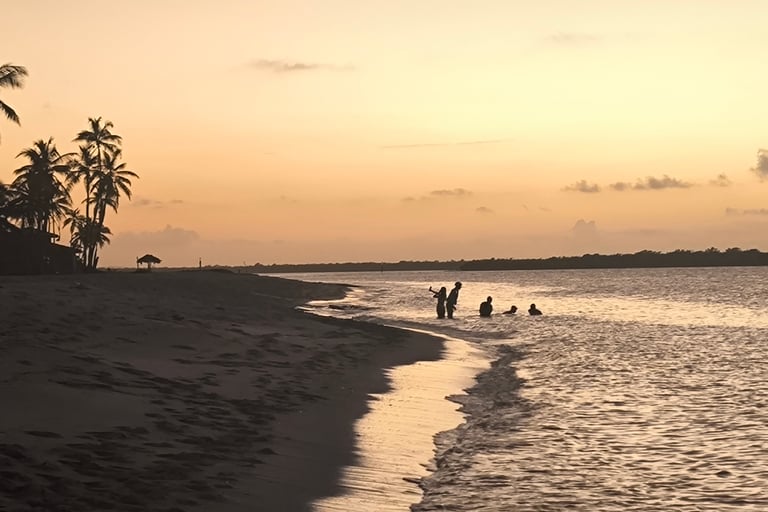
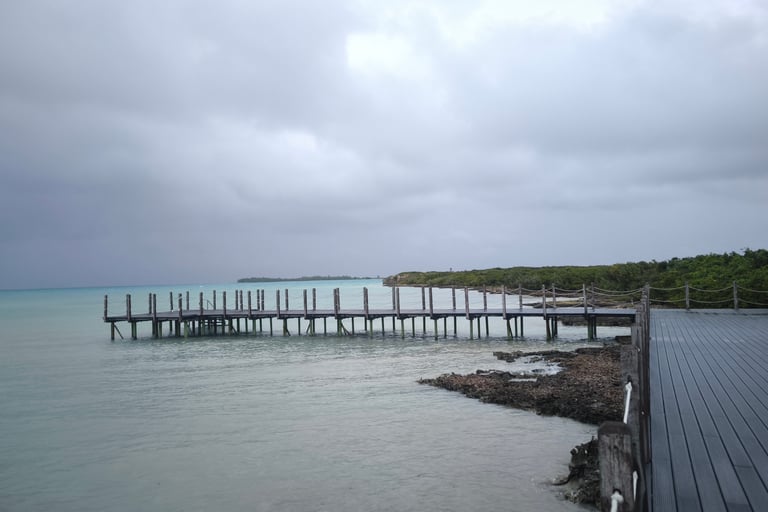
Our next stop was the nearby Coco Beach – called that for the gringos – or Playa Boca by the Cubans. We went both in the afternoon and again the next morning and then we really understood why the waitress in Santiago wanted to go there. There were a few houses stretched along the smooth white sand beach. They had risen organically rather than as part of some tourist or hotel development. A little bit like a reggae town without the music, just the quiet sound of nature. There were very few visitors and only the snack bars on the other side of the road were open.
First, we tried to park on a secluded part of the beach but realized when we were out in our swim trunks that there were too many sharp cliffs where the sea met the sand. When we wanted to move the car, the front wheels sank into the sand. My two sons, 17 and 9, tried pushing to no avail. The younger one suggested that he would drive. Even though he had never driven before – only held the steering wheel a couple of times on country roads – I realized his suggestion was our best chance at success. So, I explained the automatic gear shift and the pedals for the breaks and injection. I took my position pushing against the back post of the driver’s window right next to him sunk deep into the seat behind the wheel. He could hardly see out of the front windshield. And as we pushed on our first attempt the little boy gently reversed the car out of the sand swamp and took it back about 10 meters as if he had been driving since he was four. We jumped and celebrated as if we had just won the Grand Prix. My Ólíver and the Proton car had authored a new Icelandic-Cuban (or Icecubian) Saga together.
We spent the rest of the day building a sandcastle making patterns on the walls with a Havana Club bottle. I swam to see the vibrant marine life and what seemed like recovering coral. The little cliffs mentioned before were scattered on the ocean floor and turned out to be great gathering places for fish. I even saw a Ray that I believe was a Yellow Stingray the size of large pizza. It scared me a bit when it seemed at one point that it was going to have a go at me.
From Santa Lucia we drove in the early afternoon 2 hours down to Camagüey, the childhood city of the boys’ grandfather. Like Holguin, one of Cuba’s great and four largest cities. Camaguey is famous for its disorienting streets that make up a maze designed to bewilder potential invaders. The purpose of the visit to Camaguey was to visit the boy’s relatives whom they – or their mother for that matter – had never met. Their grandfather was born and raised there but now lives in Ecuador. My wife had booked an amazing AirBnB for us, two big, beautiful rooms in a colonial era house just off the Plaza de los Trabajadores, where the grand, yet homely Church of our Lady of Mercy stands (Iglesia de Nuestra Senora de la Merced).
We arrived in the afternoon and immediately got busy trying to get in touch with our uncles and auntie in the city. We first met two uncles, Pedro the economist and Fidel the dentist, the sons of the grandfather’s brother Pedro Luis – a legendary music teacher in the city who continued working until his mid or late 80s. Pedro was retired but Fidel was working privately in Havana. He had come down to help his brother take care of their mother who had had one leg amputated and was tied to a wheelchair. She was going a little bit senile but great fun. She kept on calling my younger boy a beautiful girl and asked if we could cut her hair in between asking for cigarettes from her sons.
After that we went straight to meet our auntie Annette who still lives in the house of her grandmother where my boys’ grandfather grew up. Her daughter Yeni was visiting. She is a tall, beautiful and very talented art student visiting from Havana. The house was attached to typical Cuban town houses but was a former farm that had stood alone before. There were wooden beams in the ceilings and an incredible collection of stamps, seashells and model airplanes that belonged to Annette’s late father, another of the Garcia brothers.
After a whirlwind of very meaningful family visits in the late afternoon and early evening, we went to pick up hamburgers to take back to our casa particular. It was nice to see a very simple yet a popular place where many well to do Camagueyans enjoyed a burger and small fruit milk shake they call batidos. I ordered 6 small burgers, 3 for my elder, 1 for my younger and 2 for me. They turned out to be rather dry overcooked chicken burgers. The elder ended up eating 3 and half and the younger only half. It reminded me of a certain Big Mac meal eating competition during my Hong Kong high school years. A Bangladeshi and a Zimbabwean gave up early. A Bolivian and a Brazilian crossed the five set-meal mark and the Brazilian gave up halfway through his sixth. To prove he was King, the Bolivian finished the Brazilian’s leftover half and went a full 6.5 – and yes – all including large portions of fries and drinks.
The next day Yeni joined us for a walk of the city. She showed us some of the main squares and the Camaguey Zoo that even had a newly born lion cub on display. Let’s just say that animal rights and freedom to roam were an afterthought in what seemed to be a non-coherent non-design of a zoo. Yeni, our niece and trusted guide, had her palm read by a Santera, the term used for religious followers of the indigenous religion called Santerismo. Practitioners usually go around all dressed in white with a crochet white hair scarf.
From Camagüey we drove up to the keys in the North where we had an all-inclusive Iberostar hotel booked in Cayo Guillermo, perhaps lesser known than its next-door neighbouring sand island of Cayo Coco. The drive there was breathtaking, including a long land bridge and flamingos, pelicans and a white slender Egret dotting the lush beach landscape. An all-inclusive hotel is fine if you don’t want to make any effort as a traveller. The hotel beach and the pool were both very nice and there was plenty of drink and food that I quite liked (I have soft spot for basic Latino cooking). The boys enjoyed putting on white hotel robes and walking along the swimming pool as if they were film stars. A lady who was one of the coordinators of the hotel entertainment programme took a liking to my younger son. She sought him out as a dance partner whenever we appeared. Afterwards he told me the following statement which he will forever be reminded of: “Dad, there are only about six Cuban women who may like you, but I will probably have about a thousand Cuban girlfriends.”
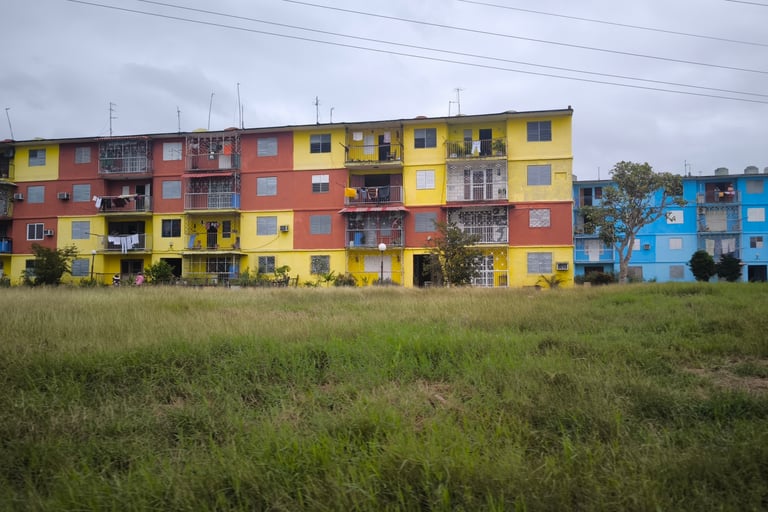
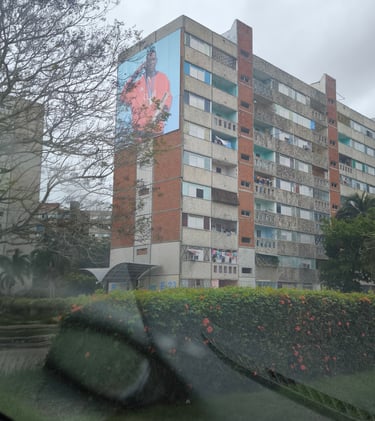
After two days of resting gringo style, we had our longest drive, 7 hours straight to Playa Larga, a beach town due Southeast of Havana. We were now in the Cuban heartland, trees and farmland as long as the eye could stretch – massive agriculture plots that were varyingly well tended and charming little farm towns selling abundant local produce. In one of the larger towns, we came across a high-rise apartment building with one side covered by a poster of the Grego-Roman wrestler Mijaín López. He deserves that poster as they are so proud of him being the only person ever to win five gold medals at five consecutive Olympic games, including at the latest Paris Olympics. An achievement comparable to that of Simone Biles, Michael Phelps or Marit Bjørgen. But him being Cuban, nobody knows of his merits, except the Olympic organizers themselves who put him as the ultimate participant in their official celebration video after the most recent Paris games.
We picked up our first hitchhikers, a mother from Trinidad City and her son. She was an agricultural worker in the area with her husband. They lived in dorms and ate food provided by their employer which she informed me was a private farming entrepreneur. Her son was beautiful but one could see that a shortage of food, hard work and other challenges had weathered her face and small frame. As we were about to arrive in Playa Larga, we asked a for directions to tidily dressed black gentleman waiting at the side of the road. It turned out that he was also going to Playa Larga after visiting his wife who was sick in hospital in the nearby larger town of Jagüey. He boarded and another hitchhiker, a slightly burly woman pulling a small bag cart who invited herself as well. We had only intended to ask for directions but now we had two people in the car. The guy turned out to be extremely helpful, but the lady had a distant attitude.
Playa Larga is so beautiful that one can just go to die there. My wife had again booked the accommodation and this one turned out to be extremely luxurious. I told my boys that Beyonce and Jay-Z would find it agreeable. It came equipped with sun deck chairs and white cloth covered sun beds, two kayaks, a TV including major streaming services, nice linens and exquisite furniture and all the food stuffs one could ask for (at an extra price). Being a member of the united international worker proletariat, I did not touch the food but rather went out in the mornings to buy fresh bread and vegetables from the salesmen who passed by on their bicycle rickshaws or horse carts. The boys’ grandmother, Miriam, came down from Havana by bus bringing gifts, cheese and Cuban guayaba paste. You can just imagine how happy she was to see her grandsons for the first time in years in that paradise of a place.
Playa Larga is surrounded by one of Cuba’s largest and most interesting nature reserves, Cienaga de Zapata. It is easy to book guides for a fair price to go on tours such as seeing flamingo and other birds in the marchlands, bird watching in the forest, a freshwater pond where the Manjuari (or Cuban gar), a prehistoric fish, still swims and local conservationists are fighting to save. There is also a recreated indigenous village. We did the bird watching forest tour with a shortish gentleman with bowlegs and a stocky frame. We saw the elusive Tocororo, Cuba’s national bird. I once heard that Cuba, the Caribbean’s largest island with its white sand beaches and incredibly fertile soil was so privileged because God had given it a kiss. When you see the Tocororo you wonder if that is true because which other country has the national bird in the own flag colours? It has a red belly, blue wings and white sides. It even sang beautifully for us. We also saw a small hawk, heard an owl, ate rat pineapple that grows on cacti, saw cows and horses grazing up close between the trees and many different types of birds such as the Bee Hummingbird, Cuban Parakeet, Cuban Emerald and Smooth-billed Ani.
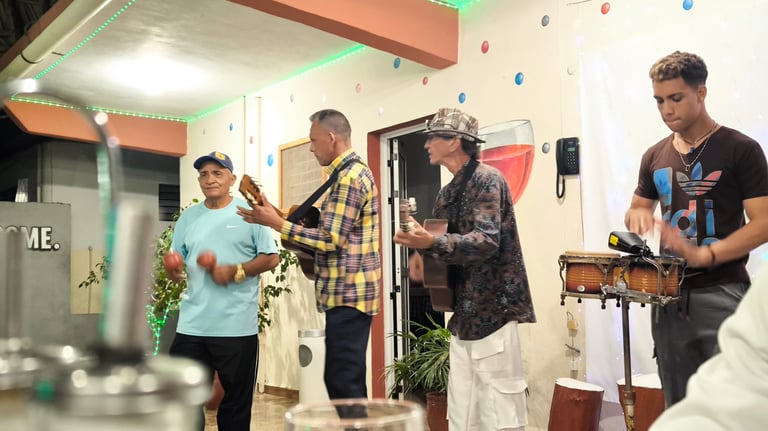
We ate dinner twice at the same restaurant. Don Julio’s had been recommended by the black gentleman hitchhiker who had also explained to us where and how to hire the guides. On the first night, my elder and I ordered grilled lobster that was served like a steak. If you ever go to Cuba you must try the Cuban lobster, caught wild, delicious, large and served widely almost as casually as a club sandwich. The food at Don Julio’s was good but we went there more for the music. There was a four-man band of three elderly gentlemen including a very handsome and talented guitar soloist and his son who was as good looking as his father and a supremely talented percussionist. They were so happy and grateful for any applause or dollar. They sang with the passion and pain that characterizes the infinite treasure that is Cuban music, with its lively son and salsa beats as well as melancholic tragedy, revolutionary anthems and, of course, lots of wild sexy love songs.
In the kayaks back at our beach house, my boys went far out to sea. Just like with driving the car on the beach, the younger one did not have to be taught kayaking for one second. And once in it, he was not to be pulled away from it or the sand and the waves throughout our time in Playa Larga.
On the third day the four of us drove up to Havana with my mother-in-law where we stayed in the new amazing rooftop apartment she has built there on top of our colonial property. Travelling through Cuba – like anywhere else – it always feels like such a relief to arrive at your accommodation and especially if it is run by welcoming and helpful hosts, like the casa particulares in Cuba almost always are. For the next 9 days we chillaxed in Havana and my two boys enjoyed their time with their abuela (grandmother), tia (auntie) and her boyfriend who also live in the house. The younger one played football barefoot on a rough walled of court in the neighbourhood of Centro Habana. My mother-in-law said it was the worst part of the city – but those 50 or so boys there aged 7-19 were there every day all day, full of energy, spice for life and talent. They begged me (well, let’s say asked) to move to Cuba and become their basketball coach.
Some of my main observations in Cuba were that the tourism infrastructure is improving and getting stronger. Despite all its hardships, it remains and incredibly beautiful and inspiring place to visit. The touristy areas are clean and accessible although some streets, especially in Havana, suffer from poorer garbage removal. Income inequality is growing and the island is obviously going through some hard times – which makes it more urgent that we all go visit. There was plenty of food everywhere but questionable who has the money to pay for it. The farming markets I saw all over had lots of locally grown vegetables. They were often in strange ugly shapes because they are real and natural and have not been modified genetically or in other ways.
There was a lot of talk of tropical mosquito borne diseases but our experience and from talking to the people we met it seemed to have mostly passed and December-May are safer months. We sprayed ourselves with repellent twice or thrice a day and had very few bites.
One also cannot help thinking that the shortages and basic lifestyle of the Cubans creates a simpler culture that is in some ways more sophisticated, not only because people are not on their mobile phones all the time, but also because they are dealing with challenges that feel more real than what make-up to wear on Instagram photos or what kind of beer to fill one’s belly with on a Friday night. People in Cuba do not consider their life to be simple, they are proud people who are battered every day with scarcity and a lack of hope for the future. In the few conversations I had with Cubans, most still expressed admiration for Fidel Castro and his achievements and even modest appreciation for living standards during his reign. However, after Fidel I was told the government had failed to even understand the needs of people in different geographical and social classes. That’s not getting into the absolute incompetence and rampant corruption among officials that was often blatantly obvious. That includes especially members of the Castro family and officials from Holguin like the current President Miguel Diaz-Canel. Talking to people and reading about it, I got the feeling that the Revolutionary Communist Party of Cuba is a collection good for less than nothing insiders. When I saw the prime minister on TV (also from Holguin) with his expensive health watch on top of the sleeve his expensive embroidered shirt (as if a health watch could monitor his plump body through the shirt), my feeling was kind of confirmed. He looked and talked like a man who thought he knew everything but had never learnt anything.
If there was one thing that there was any shortage of in Cuba it was beer and rum. I took my son to Bodegita del Medio – the bar where Ernest Hemingway had his Mojitos – and my son had his first in that Mecca of the Mojito. We also visited Hemingway’s estate in the suburbs of Havana (Finca Vigia). This being Cuba, everything there looked like it really was, old and tidy. It made the visit more interesting in a way because it looked like Ernest had just stood up one day and walked out. His books lined all the walls and his typewriter was still there on the desk. Perhaps like him back then, I must now stand up and move on to other places, other thoughts and other endeavours. I left Cuba knowing that I would return in two or three years, not because of the woman I love. But because it is the island I adore.
Where Even the Birds Wear National Colours: Across Cuba in 10 days
With photos at the end By Haflidi Saevarsson
in Havana and Reykjavik, January 2026